OUR TEAM

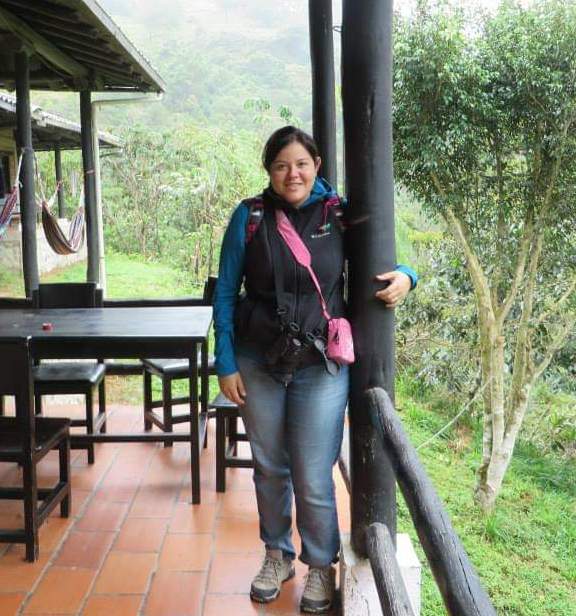
Lydia Lozano Angulo, Executive Director
lydia@northernjaguarproject.org
Lydia holds a degree in zoology from the Universidad Autónoma de Sinaloa. During her early professional years, she collaborated with different international research and conservation groups focused on sea turtles and birds. Soon after, she expanded into working with a more comprehensive vision for conserving ecosystems and species, which included land conservation, community engagement, environmental education and research. For almost a decade she ran the México conservation program for Nature and Culture International where her expertise resulted in the effective establishment and management of private and state protected areas (around 54,000 hectares) of tropical deciduous forests. In 2019 she was given the Disney Conservation Hero award for her work preserving México´s diverse ecosystems. She created the “Día del jaguar” festival in Álamos and organized it for 5 consecutive years, becoming one of the most recognized wildlife festivals in the region and leading to the declaration of the International Day of the Jaguar. Recently she has been collaborating with other conservation groups on the creation of new protected areas and regional conservation plans.
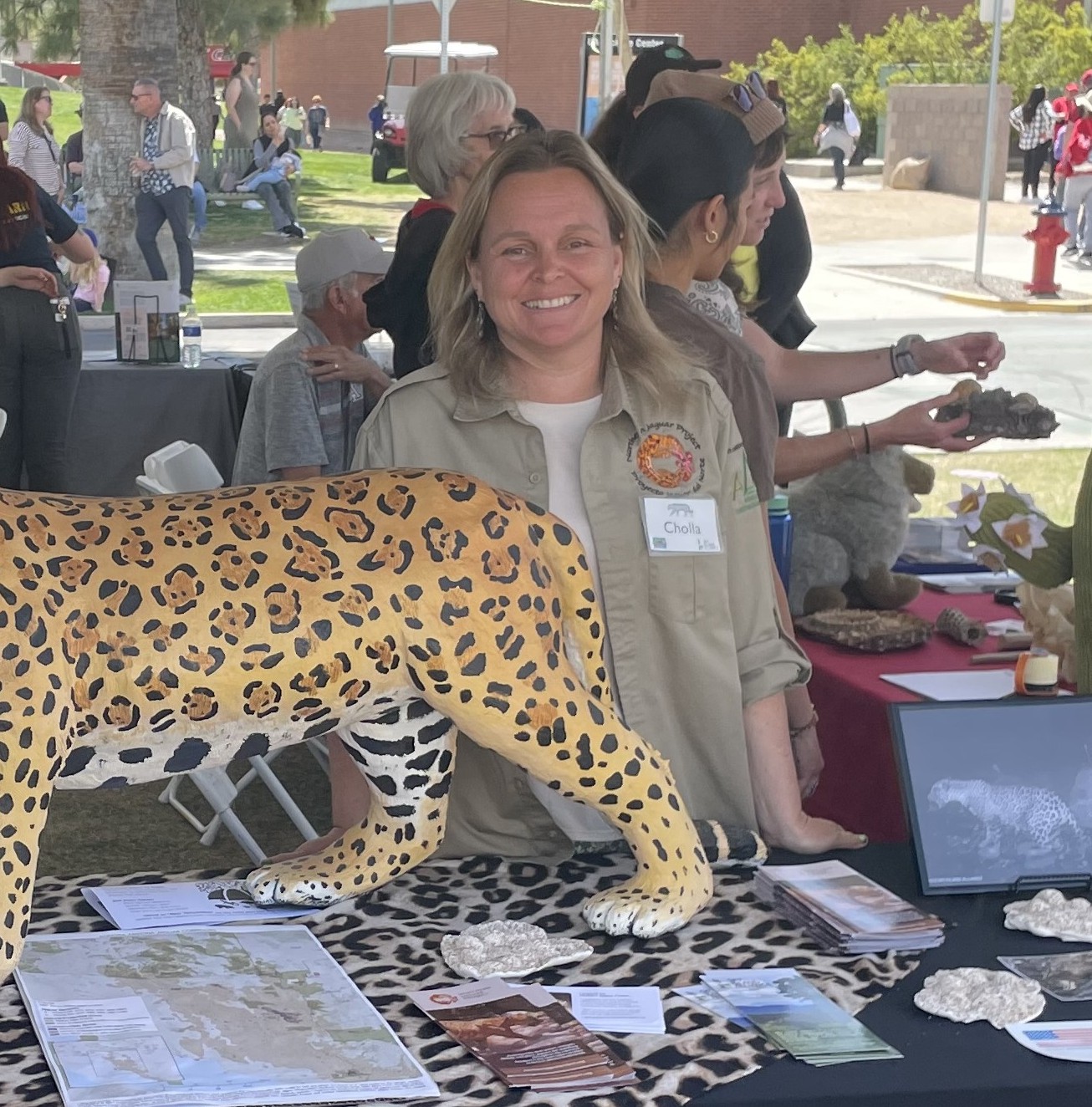
Cholla Rose Duir, Assistant Director
cholla@northernjaguarproject.org
Cholla Rose Duir was born in Tucson, AZ, and has lived throughout the Southwestern region. Cholla’s nonconformist parents instilled a deep appreciation for the environment, art, and social justice in their children. Cholla received an AS degree in Veterinary Technology (2003) and a BA in Sustainability Studies (2019) from Colorado Mountain College. She has always felt a kinship with animals and began her career with animals as a veterinary technician with a particular interest in wildlife. After more than a decade in the veterinary medicine field, she decided to pursue a degree in sustainability with an emphasis on wildlife conservation. Over the past five years, Cholla helped manage the Borderlands Wildlife Preserve in Patagonia, AZ. She joined Northern Jaguar Project in October 2023 and is excited to be a part of a team dedicated to working with people and jaguars.
If you could be any wild animal for a day, what would you be — and why?
I would be a bird. I would love to experience flight, and when I was younger, I dreamed of becoming a pilot. I got to fly a small plane over the ocean in San Diego once, but life had different plans for me, and I ended up going into veterinary medicine after high school.
What sparked your love for nature or animals?
It is hard to say what sparked my love for animals since I cannot remember when I was not drawn to them. As a child, I spent much time alone outdoors and grew up within walking distance of the U of A farm in Tucson, AZ. I rode horses weekly for years, and my parents allowed me to drag home stray animals frequently to care for. I always connected with the animals and related to them as close friends or equals. I still do today and try to give them the same respect as I would a person.
What’s the most unforgettable wildlife encounter you’ve had?
One summer in college, I lived alone in a remote cabin in the Colorado mountains. It was the only rental I could find that was pet-friendly, and I had a cat and a dog at the time. One evening at sunset, my cat, who was outside, jumped back indoors at a very high speed through my bedroom window. Expecting she was running from a coyote, I pulled back the curtains to scare it away and found myself staring into the eyes of a Canada lynx! The only thing separating us was the pain of glass. We held each other’s gaze for a few seconds before it retreated to about fifty feet away to watch the house for more easy snacks. It was a beautiful encounter with a happy ending for everyone involved, including my very lucky cat.
How do donor contributions help you make a real-world impact?
Donor contributions allow NJP to support dedicated staff members like me financially. Contributions enable me to complete all the administrative tasks, outreach, and communication to ensure NJP’s mission is well communicated and continues inspiring support. This support continues to fund the stewardship and expansion of the 56,000-acre Northern Jaguar Reserve, the Viviendo con Felinos ® program, scientific research, and education. These programs have led to a stable population of jaguars in the reserve region, an actual, measurable, real-world impact!
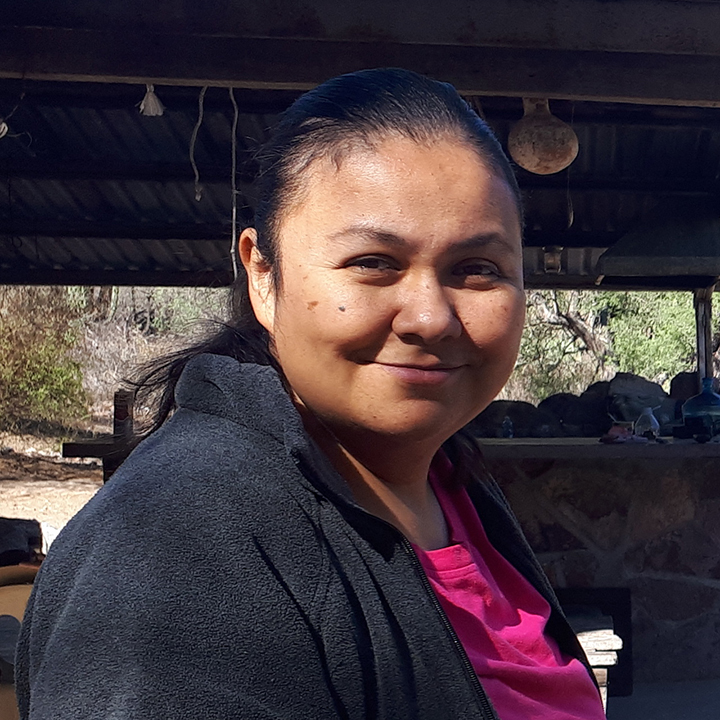
Carmina E. Gutiérrez González, Ph.D., Research Coordinator
Carmina received her M.S. from the Instituto de Ecología, studying mammalian carnivore communities and camera trapping in arid ecosystems. She particularly likes to work with GIS, landscape ecology, and population dynamics related to carnivore species, and has led camera training for the Yaqui community in the Sierra Bacatete. Carmina started working on the Northern Jaguar Reserve in 2008, and in 2016, received her Ph.D. in Biological Sciences from the Universidad Autónoma de Querétaro based on her jaguar research on the reserve and Viviendo con Felinos ranches. She has participated in carnivore projects in Querétaro, Sonora, Sinaloa, Jalisco, and Belize. Carmina finds each trip to the reserve to be an adventure within its ever-changing and unique wilderness landscape.
What’s your “origin story”? How did you find your way into wildlife work?
I was fortunate to study at the same university where Dr. Carlos López is working (Autonomous University of Querétaro). He saw in me a potential I didn’t even know I had for working with wildlife. Thanks to him, I began working with carnivores, which later led me to support my first project with jaguars in the Sierra Gorda of Querétaro, and eventually with jaguars in Sonora, where I had the opportunity to get to know the Northern Jaguar Reserve.
How did you find your way to work with NJP/ACN/the Northern Jaguar Reserve?
I had the opportunity to support the Yaqui community in Vícam, Sonora with their first camera trap monitoring effort to search for jaguars in the Sierra de Bacatete. During this fieldwork, I met the staff working at the Northern Jaguar Reserve, who later invited us to join the project there.
Was there a moment when you *knew* this was your calling?
I don’t have one specific moment. I believe that every day there are certain activities that help keep me on this path. For example, I love photo-identifying wild cats—every time I get a “match” for a jaguar or ocelot, I feel like that’s the reason it’s worth continuing to analyze the photos. When I see the joy on children’s faces after a festival, or when people speak positively about the project, I feel that it’s worth continuing to raise awareness.
How do you and your team keep the energy up during tough stretches?
There have been moments when fear and uncertainty were overwhelming—for example, during the COVID-19 pandemic—but we all knew we had to stay alert, take care of ourselves, and keep moving forward with our work. Each member of our team understands that no matter what part of the work we do, we are a fundamental piece in the conservation of the jaguar. We all know that the small actions we take each day are ultimately reflected in the number of jaguars detected, the photos of cubs, and the positive comments from community members about wildlife. And even though each of us plays a small part, we know we are part of something much bigger.
¿Cuál es tu “historia de origen”? ¿Cómo encontraste tu camino hacia el trabajo con la vida silvestre?
Tuve la suerte de estudiar en la misma universidad donde el Dr. Carlos López está trabajando (Universidad Autónoma de Querétaro). Él vio en mí el potencial que ni yo sabía que tenía para trabajar con la fauna silvestre. Gracias a él empecé a trabajar con carnívoros para después apoyar en mi primer proyecto con jaguares en la Sierra Gorda de Querétaro y posteriormente con jaguares en Sonora donde pude conocer la Reserva Jaguar del Norte.
¿Cómo encontraste tu camino a trabajar con NJP/ACN/Reserva Jaguar del Norte?
Tuve la oportunidad de apoyar a la comunidad Yaqui en Vicam, Sonora en su primer monitoreo con cámaras trampa para buscar jaguares en la Sierra de Bacatete. Durante este trabajo de campo, conocí al personal que trabajaba en la Reserva Jaguar del Norte, quienes posteriormente nos invitaron a trabajar ahí en el proyecto.
¿Hubo un momento en el que *supiste* que esto era tu vocación?
No tengo un momento específico. Creo que cada día tengo ciertas actividades que me sirven para seguir en este camino, por ejemplo, amo fotoidentificar felinos, cada que obtengo un “match” de jaguares u ocelotes, siento que esa es la razón por la que vale la pena seguir analizando fotos, cuando veo la felicidad en los niños después de un festival o las personas nos hablan bien del proyecto, siento que vale la pena seguir concientizando a las personas.
¿Cómo tú y tu equipo mantienen la energía en los momentos difíciles?
Hay momentos donde el miedo y la incertidumbre han sido mayores, por ejemplo, durante la pandemia de COVID-19 pero todos sabíamos que debíamos mantenernos alertas, cuidarnos y seguir adelante con nuestro trabajo. Cada miembro de nuestro equipo sabemos que no importa qué parte del trabajo hagamos, somos una pieza fundamental en la conservación del jaguar. Todos sabemos que las pequeñas acciones que hacemos cada día, al final se ven reflejadas en el número de jaguares detectados, las fotos de cachorros, los comentarios de personas de la comunidad en favor de la vida silvestre y aunque cada quien hace una pequeña parte, sabemos que somos parte de un gran proyecto.
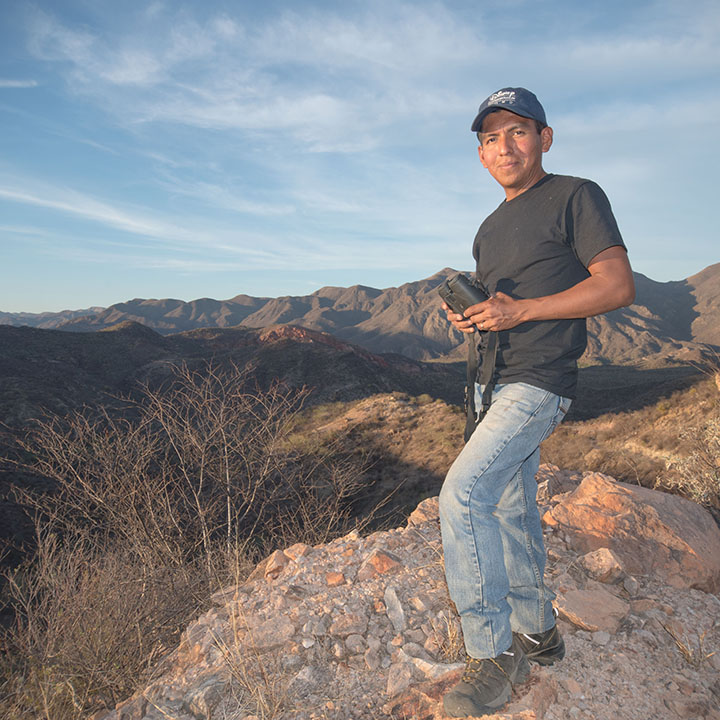
Miguel A. Gómez Ramírez, M.Sc., Reserve Manager
Miguel has worked with wildlife conservation projects in Querétaro, Sinaloa, Jalisco, Colima, Chihuahua, and Sonora. He enjoys nature photography and loves spending time in the field. Miguel previously collaborated in training the Yaqui indigenous community in the use of motion-triggered cameras, confirming jaguar presence in the Sierra Bacatete. He also worked with Naturaleza y Cultura Sierra Madre to design a camera monitoring strategy to study jaguars near Alamos. Miguel began working on the Northern Jaguar Reserve in 2008. In 2015, he received his M.S. in Biological Resources from the Universidad Autónoma de Querétaro focused on ocelot densities on the reserve and Viviendo con Felinos ranches.
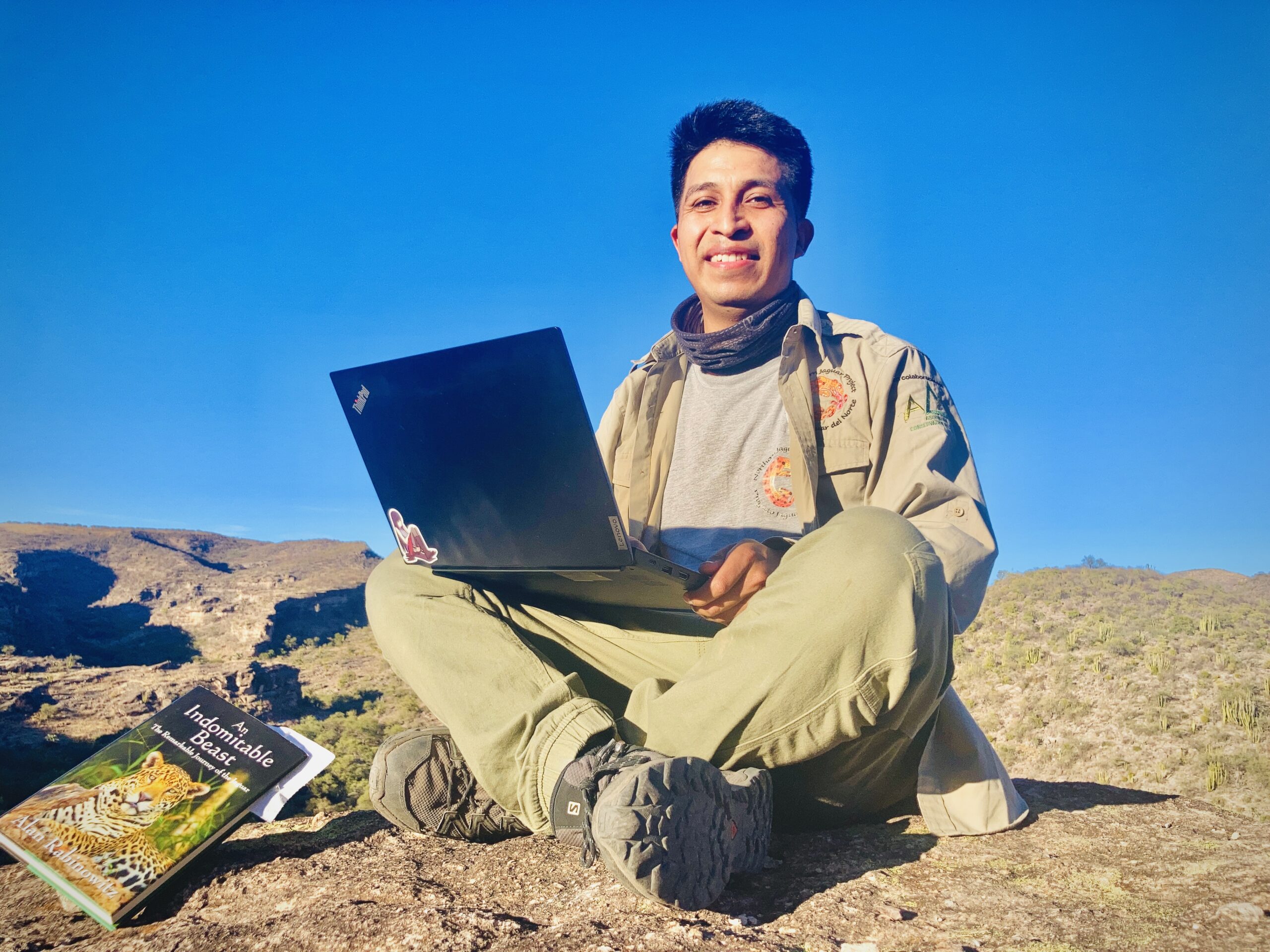
Cristhian A. Valente Sánchez, Field Biologist
Cristhian is a biologist graduated from the Autonomous Metropolitan University in Mexico City. His main goal is to contribute to the development of a more environmentally friendly and responsible society. He has experience working in private consultancy and has been involved in conservation projects both in Mexico and abroad. Before joining the Northern Jaguar Project, Cristhian assisted in developing experiments with insects in the Peruvian Amazon and helped set up camera traps for mammal surveys in the same region. Currently, he serves as the field biologist managing the placement and maintenance of motion-triggered camera traps on Viviendo con Felinos ® ranches. Additionally, he assists with other activities of the project as needed. Personal interests include cooking and studying the Japanese language. He also enjoys volunteering, which has taken him to far places like Burundi in Africa.
If you could be any wild animal for a day, what would you be — and why?
Right now, I would like to be a lizard. As a child, I loved climbing trees and spending a lot of time in them—even at night, to watch the stars, or when the wind blew strong so it would sway me from side to side. This habit led my grandfather to give me the nickname “Lizard.” He passed away recently, and I think that wherever he is, I could bring a smile to his face by saying, “Look, Grandpa, I’m a lizard—make the wind blow.”
What’s one surprising skill or hobby that helps you in your role?
It’s not surprising, and it’s quite common, but I like to write before going to sleep or upon waking up. It helps me relax, clear my mind, and not forget the crazy and nonsensical ideas I have while walking in the mountains during the day.
What’s the most unforgettable wildlife encounter you’ve had?
Four years ago, in southeastern Mexico, my coworker and I had spent the entire morning trying to extract a crocodile from a deep reservoir full of branches. Due to a sudden change of plans, machinery was scheduled to enter that same day to destroy that body of water. I don’t know if it was curiosity or hunger, but after a couple of failed attempts, the large animal finally fell into our trap. Tired and completely soaked, we immobilized it, loaded it into the vehicle, and drove many kilometers with the goal of showing it to the national environmental authorities so they could decide on a relocation site. However, due to an unexpected delay on their part, the meeting was postponed by a day. With night approaching and no way to return to the jungle, the question arose: What would we do with that enormous crocodile? We saw no better option than to put it in the apartment where we lived. So, very quietly, we carried it up the stairs and put it into one of the rooms. After securing and hydrating it, each of us went to sleep—or at least tried to—because who could close their eyes knowing there was a crocodile under their bed? The classic childhood fear, but as adults and 100% real. The hardest part awaited us the next day when trying to get it out. We were almost at the stairs when suddenly the neighbor’s door opened and they saw us carrying that animal down the hall. My coworker and I looked at each other and feared the worst when we saw the neighbor’s partner also come out; we thought they would make a fuss and accuse us of having a dangerous animal in the apartment. But that wasn’t the case. Seeing their amazed and excited faces, we explained that we were biologists and that due to circumstances beyond our control, we had to do this. It turned into a very pleasant conversation where they expressed their admiration for the work we were doing. When they said goodbye, they left us a couple of very cold beers to drink later; as a reward, we let them pet the animal. I will never forget the words and excitement on the faces of those two nurses. Just as I won’t forget that first crocodile, nearly three meters long, that I had to relocate; wherever it is now, I hope it forgives me for putting it through that difficult time.
Si pudieras ser cualquier animal salvaje por un día, ¿cuál serías y por qué?
En este momento, me gustaría ser una lagartija. De niño me encantaba trepar árboles y pasar mucho tiempo en ellos, incluso durante la noche para observar las estrellas, o cuando corría fuerte el viento paraque me meciera de un lado a otro. Este comportamiento hizo que mi abuelo me diera el sobrenombre de “Lagartija”. Él murió recientemente, y creo que, donde sea que este, podría sacarle una sonrisa al poder decirle, “mira abuelito, soy una lagartija, haz que sople el viento”.
¿Cuál es una habilidad o pasatiempo sorprendente que te ayuda en tu función?
No es sorprendente, y es bastante común, pero me gusta escribir antes de dormir o al despertar. Me ayuda a relajarme, aclarar mis ideas, y a no olvidar ideas locas y sin sentido que pienso durante los días caminando en la sierra.
¿Cuál ha sido tu encuentro más inolvidable con la vida silvestre?
Cuatro años atrás, en el sureste de México, mi compañero de trabajo y yohabíamos pasado toda la mañana intentando extraer un cocodrilo de un represo profundo lleno de ramas. Por un drástico cambio de planes, la maquinaria entraría ese mismo día a destruir ese cuerpo de agua. No sé si fue su curiosidad o el hambre, pero después de un par de intentos fallidos, el gran animal por fin cayo en nuestra trampa. Cansados y completamente mojados, lo inmovilizamos, lo trepamos al carro y condujimos muchos kilómetros, con el objetivo de mostrarlo a las autoridades ambientales nacionales y ellos definieran sitio para reubicarlo. Sin embargo, debido a un imprevisto de su parte, la reunión se pospuso un día. Con la noche a punto de llegar, y sin forma de regresar a la selva, surgió la pregunta ¿Qué haremos con ese enorme cocodrilo? No vimos mejor opción que meterlo al departamento donde vivíamos. Así que, muy sigilosamente lo subimos por las escaleras y lo introdujimos a uno de los cuartos. Después de reasegurarlo e hidratarlo cada uno se fue a dormir. O esa era la idea, pues ¿Quién podría cerrar los ojos sabiendo que hay un coco debajo de su cama? El clásico miedo de un niño, pero de adulto y 100% real. Lo mejor nos esperaba el día siguiente al intentar sacarlo. Casi llegábamos a las escaleras cuando de repente la puerta del vecino se abrió y nos vio cargando ese animal por el pasillo. Mi compañero y yo nos miramos y pensamos lo peor al ver que la pareja del vecino también salía, creímos que harían un escándalo y nos acusarían por tener a un animal peligroso en ese lugar. Pero no fue así, al ver su cara de asombro y emoción les explicamos que éramos biólogos y que por cosas fuera de nuestro control tuvimos que hacer eso. Fue una plática muy amena, donde nos expresaron su admiración por el trabajo que hacíamos. Al despedirse nos dejaron un par de cervezas bien frías para beber más tarde; nosotros, en recompensa les dejamos acariciar el animal. No olvidaré las palabras y la emoción en las caras de ese par de enfermeros. Así como no olvidaré a ese primer cocodrilo de casi tres metros que tuve que reubicar; donde quiera que este, espero me disculpe por hacerle pasar ese mal rato.
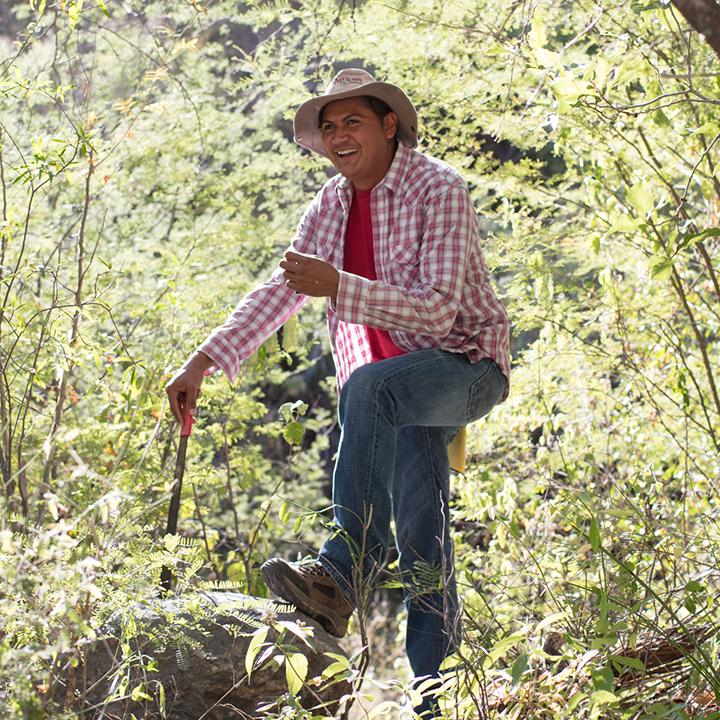
Heraclio “Laqui” Duarte López, Field Technician
Laqui started as a resident vaquero on the Northern Jaguar Reserve, along with his father, brother, and nephew. He has assisted visiting researchers since 2010, with particular interest in studying birds on the reserve. Laqui is trained in camera placement and maintenance, and today is responsible for checking motion-triggered cameras on the reserve and Viviendo con Felinos ranches. He also has experience with restoration techniques and tractor operation, and helps with gabion construction and invasive species removal as available. His son, José Ezequiel, participates in our Eco-Guardian program. Laqui is a recipient of the Disney Conservation Hero award.
What’s your “origin story”? How did you find your way into wildlife work?
My origin story begins in Sahuaripa, the place where I was born and raised. As a child, my parents took me to a cattle ranch where my father worked, and from that moment on, I began to connect with wildlife—a connection that continues to this day.
What sparked your love for nature or animals?
My love for nature began at a very young age. Being in contact with the natural world, I enjoyed—and still enjoy—watching and observing wild animals, whether they are land animals, birds, or aquatic creatures. I always feel a sense of joy just being able to see them, even if only for a few seconds.
What part of your work makes you proudest?
I feel proud to work in conservation. And when people ask me what kinds of animals are in the reserve, it’s an honor to tell them a bit about what’s there and about the work we do in the reserve.
¿Cuál es tu “historia de origen”? ¿Cómo encontraste tu camino hacia el trabajo con la vida silvestre?
Mi historia de origen comienza en Sahuaripa lugar donde nací y crecí. Siendo un niño mis papás me llevaron a un rancho ganadero donde trabajaba mi papá, desde ahí empecé a relacionarme con la vida silvestre hasta el día de hoy.
¿Qué despertó tu amor por la naturaleza o los animales?
Mi amor por la naturaleza empieza desde muy chico, estando en relación con la naturaleza, me gustaba, y aun me gusta ver y observar a los animales silvestres, tanto terrestres, como aves y acuáticos. Siempre siento bonito poder verlos aunque sea por segundos.
¿Qué parte de tu trabajo te hace sentir más orgulloso/a?
Me hace sentir orgulloso el hecho de trabajar en la conservación. Y cuando la gente me pregunta que si que tipos de animales hay en la reserva, es un orgullo platicarle un poco acerca de lo que hay y del trabajo que hacemos en la reserva.
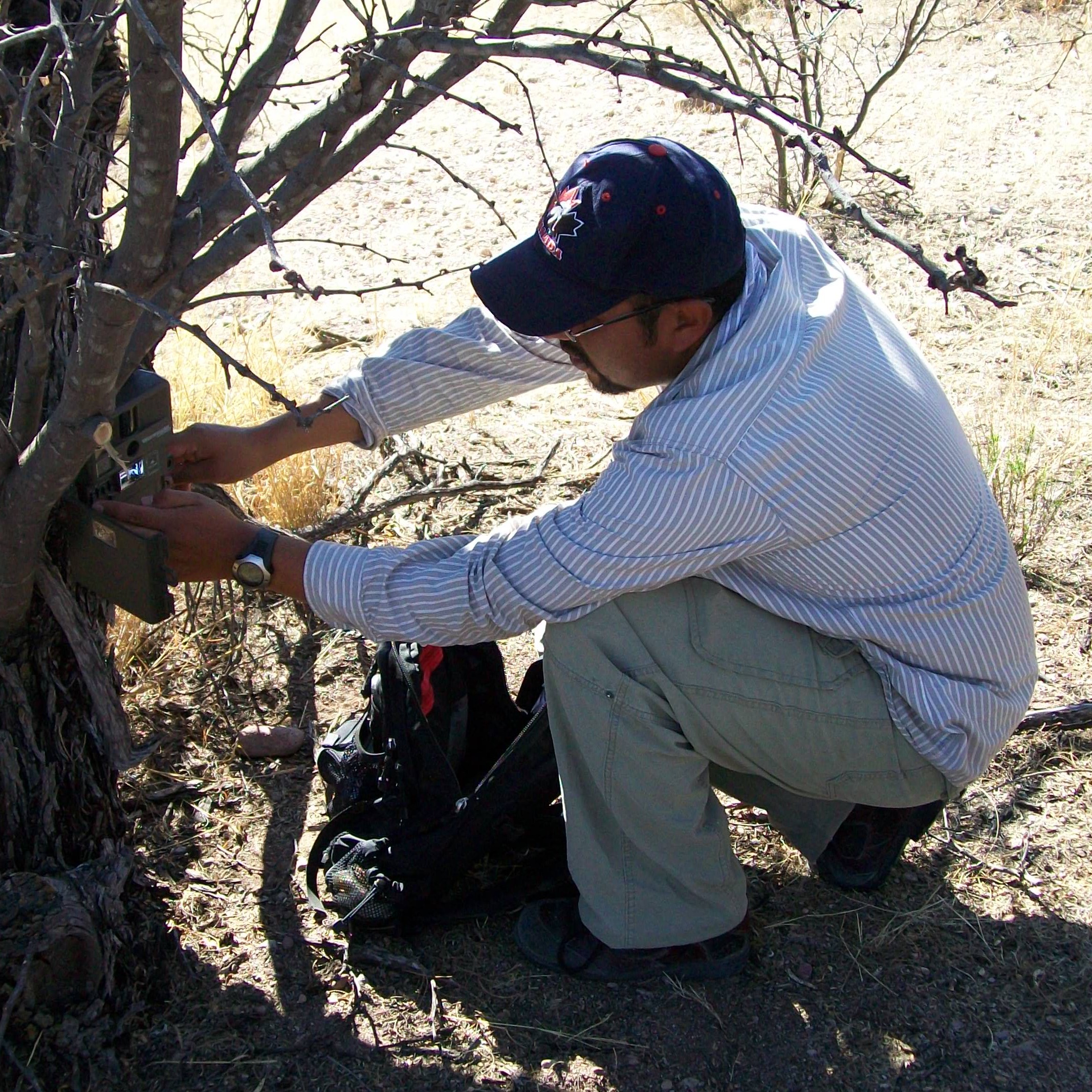
Helí Coronel Arellano, Ph.D., Photo Database Technician
Helí received a bachelor’s degree in Biology from the Universidad Autónoma de Hidalgo and later studied at the Universidad Autónoma de Querétaro, where he received his M.Sc. and Ph.D. in Biological Sciences. Helí’s primary interests are related to medium and large mammal ecology and conservation, and he has worked with more than 20 projects involving Mexican gray wolf, jaguar, black bear, white-tailed deer, and gray fox. He has experience in natural protected areas as well as urban environments. Following completion of a post-doctoral study at the Universidad Nacional Autónoma de México, Helí joined our team to share his passion for wildlife in 2020.
What’s your “origin story”? How did you find your way into wildlife work?
In the final semesters of my Biology degree, through different subjects (e.g., paleontology, fungi, botany), I had the opportunity to do fieldwork. Working with wildlife turned out to be the most fascinating part — especially with mammals — due to the challenges their study and conservation present.
If you could be any wild animal for a day, what would you be — and why?
A black bear, because I’d spend most of my time in the forest eating as much as I want without worrying about weight. I could sleep for countless hours during hibernation. And, being a top predator, it’s unlikely anything or anyone would bother me.
What’s one surprising skill or hobby that helps you in your role?
Perseverance — because I need to review large volumes of photographs, I must remain consistent and disciplined to process so many images efficiently.
What sparked your love for nature or animals?
Becoming fully aware that they are threatened by our activities — it’s our duty to help conserve them, whether through small actions or large-scale initiatives involving many stakeholders.
What’s the most unforgettable wildlife encounter you’ve had?
I was helping with a black bear monitoring project, placing camera traps in the Sierra del Nido, Chihuahua. It was a cloudy, very windy day. As we walked a mountain trail with equipment on our backs and sweating heavily, we found a large male black bear sleeping right in the middle of the path. Once he noticed us (from about 5–8 meters away), still a bit drowsy, he looked at us, got up, turned around, and slowly walked away in the opposite direction — giving us a unique chance to observe him fully.
That encounter left a deep impression on me. I realized that, because of the trail’s winding shape and the sound of the wind, the bear never heard us coming. To this day, that moment has given me hours of reflection and so many questions: Why didn’t he attack after being startled? What can I do to protect them? Why weren’t they protected under Mexican law back in 2006? How do they still persist on ranches where predators have been killed for decades? Some of those questions remain unanswered.
What part of your work makes you proudest?
Knowing that I’m contributing to the protection of the northernmost breeding population of jaguars in northwest Mexico.
What’s something donors might be surprised to learn about your work?
I’ve reviewed 1.6 million photographs and 3,200 videos, where I’ve seen countless beautiful images and fascinating wildlife moments: jaguars, deer, peccaries, coatis, turkeys with chicks, pumas marking their territory (scratching tree trunks, defecating, urinating), a herd of peccaries defending against a jaguar attack, animals mating (jaguars, deer, peccaries), species that theoretically shouldn’t be in the area (like otters and black bears), predators with unusual prey (gray foxes with snakes in their mouths), foxes and skunks walking together on trails (a behavior seen elsewhere in their range), deer fighting for territory, coyotes carrying various items (prey, sticks). It’s impossible to remember all the curiosities I’ve seen.
Is there anything else you would like our followers to know about you or your work?
I’m deeply grateful to donors for giving me the privilege to do work that brings me great personal satisfaction and contributes to the conservation of threatened species.
Your support is vital for the survival of the wild cats not only in the reserve and neighboring ranches, but also in Mexico and the United States. This place has become an international model of conservation.
Our work is slow, difficult, and labor-intensive — and it can only be measured in the long term. Especially now, when both Mexico and the U.S. have gradually neglected the effective protection of endangered species.
Thank you for your support. We’re committed to not letting you down — and to letting our results speak for our work. Sending warm regards.
¿Cuál es tu “historia de origen”? ¿Cómo encontraste tu camino hacia el trabajo con la vida silvestre?
En los últimos semestres de la mi carrera (Lic. Biología), en diferentes materias (e. g. paleontología, hongos, botánica), tuve la oportunidad de hacer prácticas de campo, y justo, el trabajo con la fauna silvestre fue lo más fascinante, en particular con el grupo de los mamíferos, debido a los retos que conlleva su estudio y conservación.
Si pudieras ser cualquier animal salvaje por un día, ¿cuál serías y por qué?
Un oso negro, ya que pasaría la mayor parte de mi tiempo en el bosque, comiendo lo más que pueda, sin preocuparme por el peso, podría dormir miles de horas cuando toque hibernar; al ser un depredador tope, sería poco probable que algo o alguien quiera molestarme.
¿Cuál es una habilidad o pasatiempo sorprendente que te ayuda en tu función?
Perseverancia, ya que al tener que revisar una gran cantidad de fotografías debo mantenerme constante y diciplinado, para así poder procesar una gran cantidad de imágenes.
¿Qué despertó tu amor por la naturaleza o los animales?
Al tener plena consciencia de que se encuentran amenazados por culpa de nuestras actividades, es nuestra obligación contribuir a conservarlos, desde una pequeña acción hasta iniciativas que involucren diferentes actores.
¿Cuál ha sido tu encuentro más inolvidable con la vida silvestre?
Me encontraba ayudando en un proyecto de monitoreo de oso negro poniendo trampas cámara en la Sierra del Nido, Chihuahua, era un día nublado y con mucho viento, así, al caminar por una vereda de montaña con el equipo en la espalda y sudando la gota gorda, en medio de la verada, se encontraba durmiendo un oso negro macho de gran tamaño; al darse cuenta de nuestra presencia (entre unos 5-8 m), un tanto somnoliento, nos miró, se levantó, dio media vuelta y comenzó a caminar lentamente en dirección opuesta, dándonos una oportunidad única de observarlo totalmente. Después del impacto que me generó este encuentro, me di cuenta de que, gracias al serpenteo de la vereda y el ruido del viento, el oso jamás nos escuchó acercarnos. Este encuentro, hasta la fecha me ha dado muchas horas de reflexión, demasiadas preguntas me surgieron, por ejemplo, ¿por qué no nos atacó al ser sorprendido? ¿qué puedo hacer para protegerlos? ¿por qué no se encontraban protegidos por las leyes mexicanas (en 2006)? ¿cómo es que en ranchos ganaderos que llevan matando depredadores por décadas, aún persisten?, preguntas que, en algunos casos, aún no encuentro una respuesta adecuada.
¿Qué parte de tu trabajo te hace sentir más orgulloso?
Saber que estoy contribuyendo a proteger a la población reproductiva más norteña de jaguar en el noroeste de México.
¿Qué es algo que podría sorprender a los donantes sobre tu trabajo?
He revisado un millón seiscientos mil fotografías y tres mil doscientos videos, en los cuáles he observado infinidad de hermosas fotografías y curiosidades de la fauna silvestre. Desde jaguares, venados, pecarís, coatís, guajolotes con sus crías, pumas marcando su territorio (arañando troncos de árboles, defecando, orinando), una manada de pecarís defendiéndose del ataque de un jaguar, mamíferos haciendo bebes (apareándose) entre jaguares, venados, pecarís, especies que en teoría no deberían estar en el sitio (como nutrias y osos negros), depredadores con presas no comunes, (zorras grises con serpientes en el hocico), zorras y zorrillos caminando juntos por veredas (comportamiento reportado en otros sitios de su distribución), venados luchando por un territorio, coyotes con diferentes objetos en el hocico (presas, troncos), me es imposible recordar todas las curiosidades.
¿Hay algo más que te gustaría que nuestros seguidores supieran sobre ti o tu trabajo?
Agradezco enormemente a los donadores por otorgarme el privilegio de llevar a cabo un trabajo que me da una gran satisfacción personal y en pro de la conservación de especies amenazadas. Su contribución es de vital importancia para la persistencia de los felinos presentes no solo en la reserva y ranchos aledaños, sino en México y Estados Unidos, ya que es un referente de conservación a nivel internacional; nuestro trabajo es un proceso lento, difícil, laborioso y solo se puede medir a largo plazo, sobre todo, en este momento, en que México y Estados Unidos han descuidado paulatinamente la protección efectiva de especies amenazadas, por su apoyo, muchas gracias y estamos convencidos de que no los vamos decepcionar y que nuestros resultados hablaran también por nuestro trabajo, les mando un gran saludo.
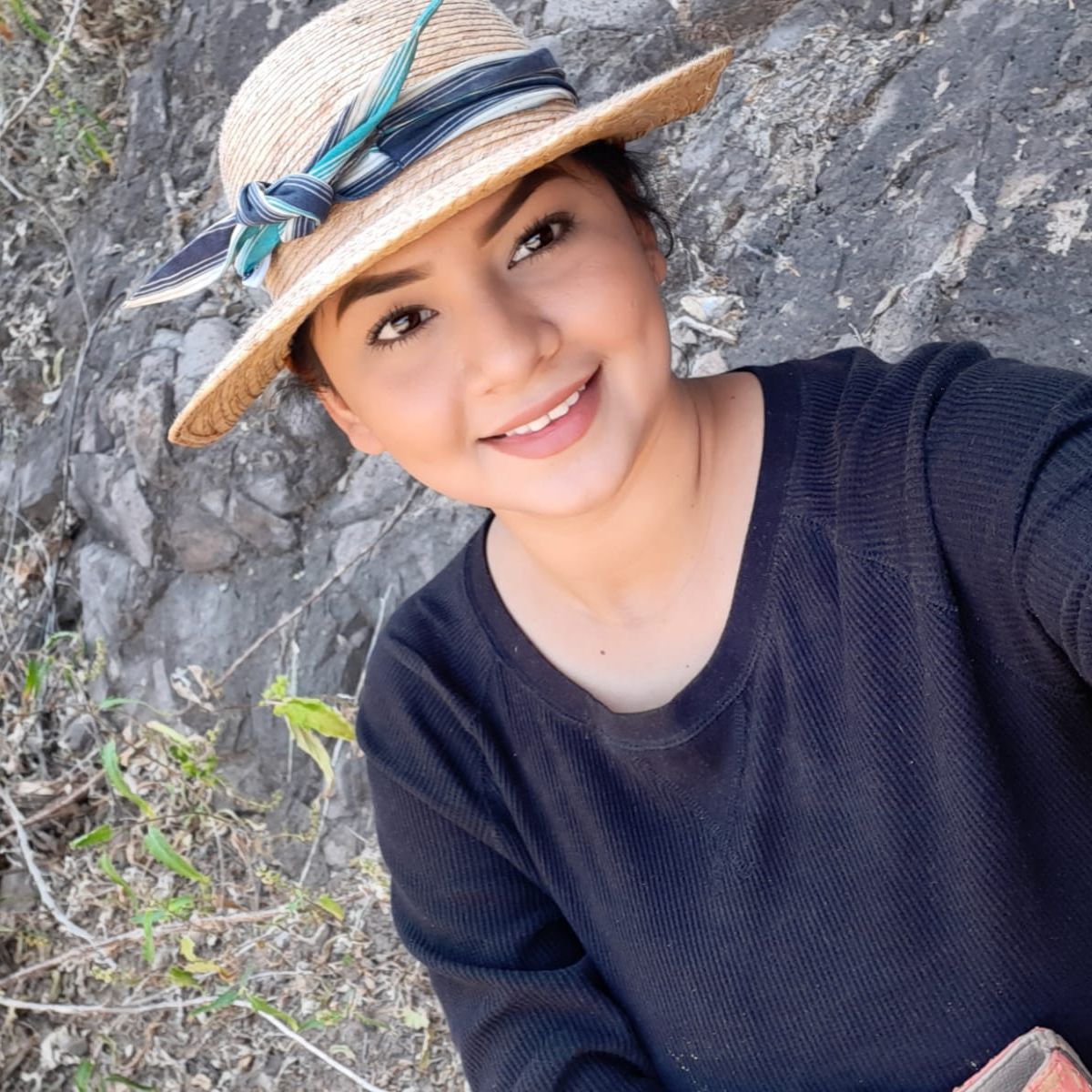
Walquiria G. Duarte Arvayo, Field Office Assistant
Walquiria completed a bachelor’s degree in psychology at the University of Sonora in December 2021. She leaned her social service and professional practices toward environmental education. In June 2022 she joined our team in the Sahuaripa field office. She carries in her nature the love of the countryside and wildlife. She is an altruistic, entrepreneurial, dynamic young woman, with a great sense of humor and responsibility. Curiosity to continue learning is one of her characteristics.
What part of your work makes you proudest?
Knowing that I’m helping with conservation—especially given the current state of our planet—contributing to an organization dedicated to preservation and recognizing the importance of living beings is very fulfilling. Working to recover and protect our planet isn’t something that concerns many people. Every day in my job, I remember that we are planting seeds of life for future generations of humans and all species.
What sparked your love for nature or animals?
I grew up surrounded by people who love nature and animals. I learned to recognize their value as living beings and how important it is to care for them and respect their space from a very young age. But it wasn’t until I joined NJP/NCF that I truly understood how relevant they are to our lives.
If you could be any wild animal for a day, what would you be — and why?
I would be an ocelot. I think it’s a very interesting and mysterious feline. I’d like to know what they do during the day, where they go, and enjoy their abilities.
¿Qué parte de tu trabajo te hace sentir más orgulloso?
Saber que estoy apoyando con la conservación, más teniendo en cuenta la situación de nuestro planeta en la actualidad, el contribuir con una organización dedicada a la preservación y el reconocer la importancia de los seres vivos me es gratificante, ya que moverse por recuperar y proteger nuestra tierra no es una actividad que les preocupe a muchos. Cada día en mi trabajo recuerdo que estamos sembrando semillas de vida para las futuras generaciones humanas y de cualquier especie.
¿Qué despertó tu amor por la naturaleza y los animales?
Crecí rodeada de personas que aman la naturaleza y los animales, aprendí a reconocer su valor como seres vivos y lo importante que era cuidarlos y respetar su espacio de desarrollo desde muy pequeña, pero fue hasta que llegue a NJP/ACN que entendí con más profundidad cuán relevante son para nuestras vidas.
Si pudieras ser cualquier animal salvaje por un día, ¿Cuál serias y por qué?
Sería un ocelote. Me parece un felino muy interesante y misterioso, me gustaría saber que hacen durante el día a donde van y disfrutar de sus habilidades.
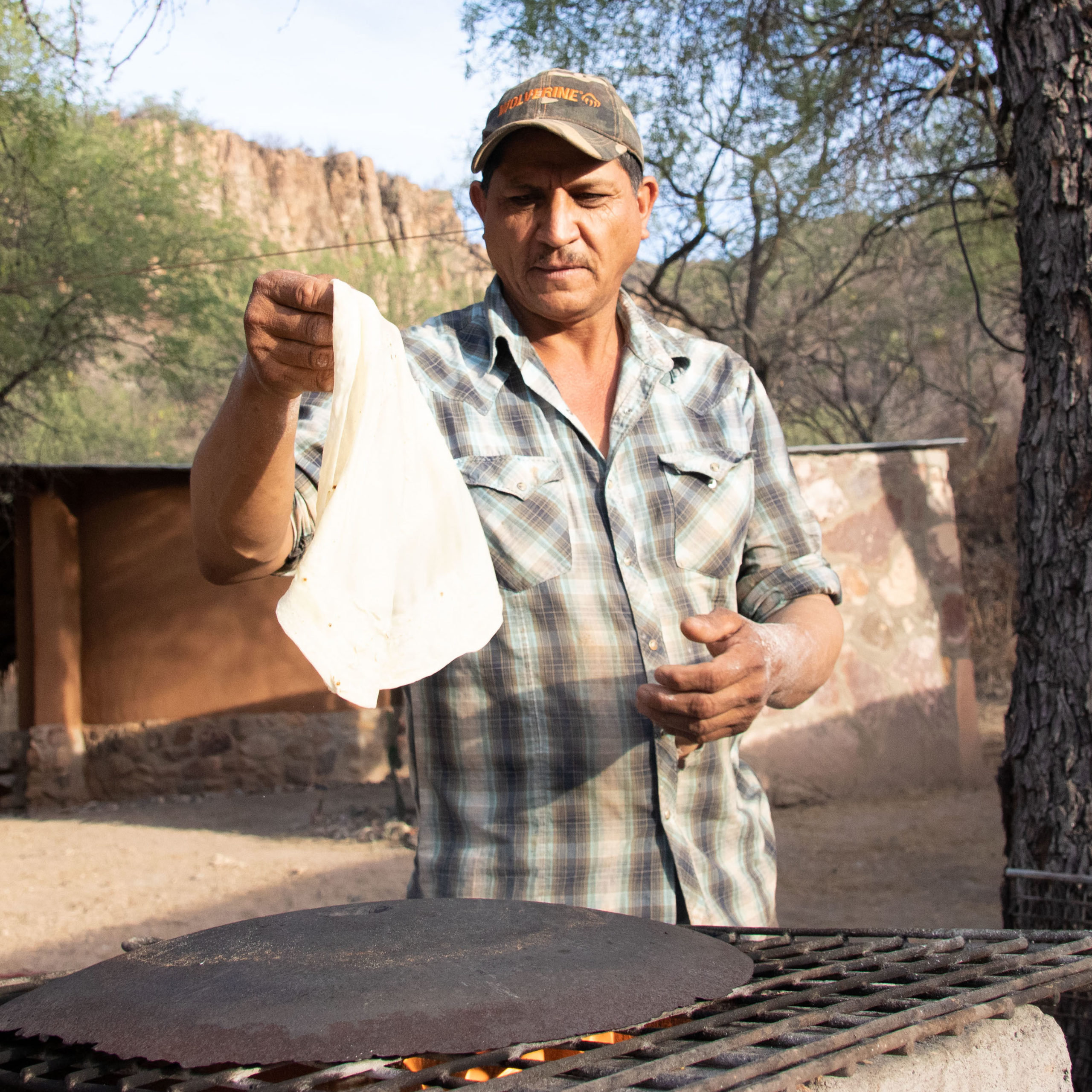
Braulio Duarte López, Vaquero
Braulio is the eldest of our vaquero Laco’s sons and inherited his father’s work ethic and knowledge. He has an inner drive to work hard as a skilled albañil (handyman) and produces quality results. As a fulltime vaquero on the Northern Jaguar Reserve since 2015, Braulio builds with adobe, wood, and stone, collects rocks to make gabions, helps repair and install fencing, and assists with motion-triggered camera maintenance as needed. Braulio likes to spend time working as a leather artisan, making belts, scabbards, and repairing saddles.
What’s your “origin story”? How did you find your way into wildlife work?
From a very young age, I was connected to fieldwork and nature. I’m originally from the town of Sahuaripa, with ancestors from nearby villages and ranches. A love for the countryside and animals runs in my family. I’ve been exposed to wildlife practically my whole life since I was a child, and I’ve learned to know, understand, and respect it.
How did you find your way to work with NJP/ACN/the Northern Jaguar Reserve?
I first went to the “La Ventana” ranch, which is now part of the Northern Jaguar Reserve, when I was 12 years old, on vacation with an uncle. Years later, I started working as a cowboy in the area alongside my father. Between 2011 and 2012, I was invited to work occasionally at the Northern Jaguar Reserve, and today I am a member of the NJP/NCF team with more than 30 years of experience.
What’s one surprising skill or hobby that helps you in your role?
Horseback riding, animal handling, especially with horses as a means of transport. I have experience taming them, shoeing them, and providing general care.
What’s the most unforgettable wildlife encounter you’ve had?
Being just a few meters away from a puma.
What’s a “day in your life” like at the organization?
When in the field, you always wake up at dawn, prepare firewood and a fire, make coffee and breakfast, and then start the day heading out into the field. You return to camp before nightfall to rest.
¿Cuál es tu “historia de origen”? ¿Cómo encontraste tu camino hacia el trabajo con la vida silvestre?
Desde muy pequeño estuve relacionado con el trabajo de campo y la naturaleza, originario del pueblo de Sahuaripa con antepasados originarios de pueblos y ranchos cercanos a Sahuaripa. El gusto por el campo y los animales ha sido hereditario. He estado expuesto a la vida silvestre prácticamente toda mi vida desde que era un niño, la cual he aprendido a conocer, entender y respetar.
¿Cómo encontraste tu camino a trabajar con NJP/ACN/Reserva Jaguar del Norte?
Fui por primera vez el rancho “la Ventana” que ahora es parte de la Reserva Jaguar del Norte, a mis 12 años de edad, de vacaciones con un tío. Años después comencé a trabajar como vaquero en la zona junto a mi padre. Entre los años 2011 y 2012 soy invitado a trabajar eventualmente en la Reserva Jaguar del Norte y hoy en día soy miembro del equipo NJP/ACN con más de 30 años de experiencia.
¿Cuál es una habilidad o pasatiempo sorprendente que te ayuda en tu función?
Cabalgar, manejo y trato con los animales, especialmente con los caballos como medio de transporte. Tengo experiencia en el proceso de amansarlos, herrar y cuidados en general.
¿Cuál ha sido tu encuentro más inolvidable con la vida silvestre?
El estar a unos metros de distancia con un puma
¿Cómo es un día en tu vida, dentro de la organización?
Estando en el campo, siempre hay que despertar al amanecer, preparar leña y lumbre, preparar café, los alimentos para desayunar y comenzar la jornada con rumbo al campo durante el día, y regresar al campamento antes del anochecer para descansar.
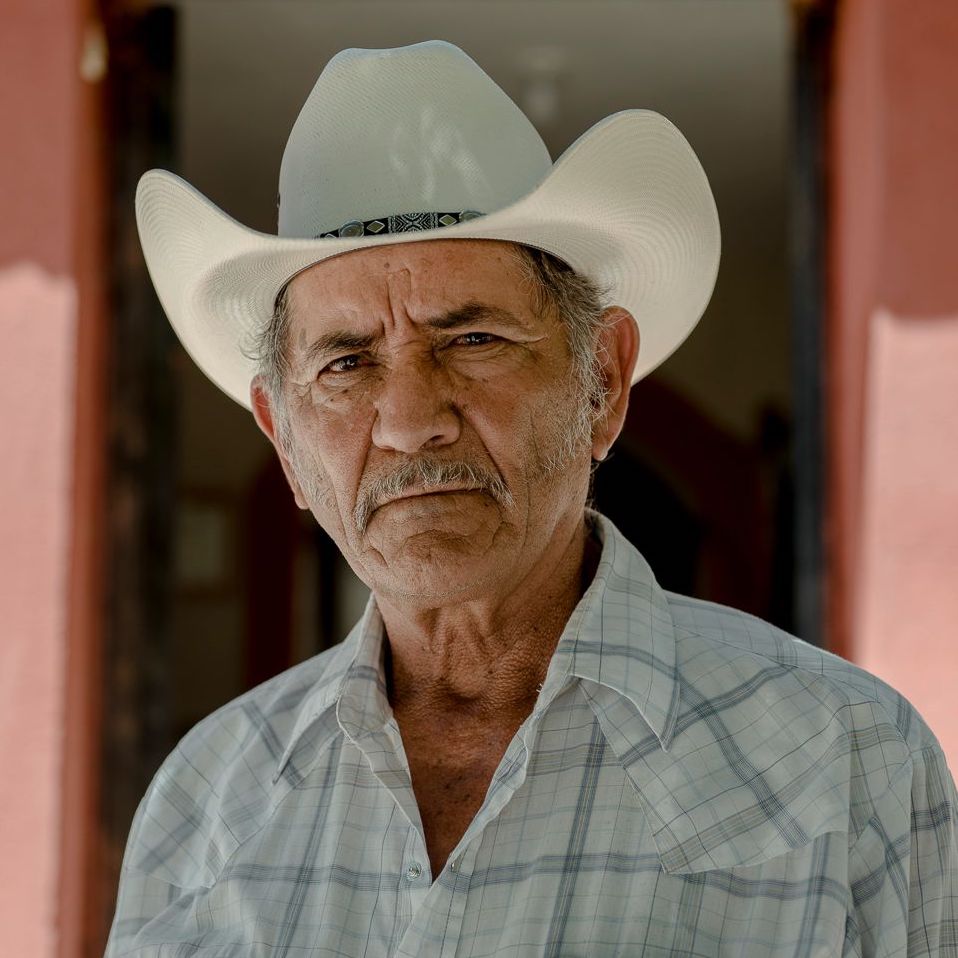
Heraclio “Laco” Duarte Robles, Vaquero
Laco, who works alongside his sons and grandson, patrols the Northern Jaguar Reserve to keep trespassers out and maintains fences to prevent wandering cattle from coming in. He is a traditional Sonoran vaquero, originally from Arivechi, and worked as the lead vaquero on these ranches since 1982. Laco has seen jaguars on more than a dozen occasions and knows this terrain better than anyone. He is also a local artisan and makes traditional leather lassos.